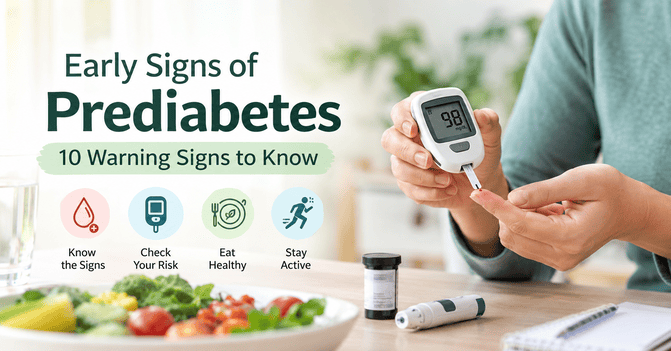
Early Signs of Prediabetes: Warning Symptoms, Causes Of Type 2 Diabetes
Prediabetes is a health condition in which blood sugar levels are higher than normal but not yet high enough to meet the diagnostic criteria for type 2 diabetes. It is an important warning sign that your body may be struggling to regulate blood glucose effectively.
The challenging part is that prediabetes often develops without noticeable symptoms. Many people feel completely healthy and may not realise that their blood sugar levels are gradually increasing.
Recognising the early signs of prediabetes, understanding your risk factors, and making appropriate lifestyle changes can help you take action before the condition progresses to type 2 diabetes.
In this article, we will explore the early warning signs of prediabetes, its common causes, the tests used for diagnosis, and practical nutrition and lifestyle strategies that can help support healthy blood sugar levels.
What Is Prediabetes?
Prediabetes occurs when the amount of glucose (sugar) in your blood is higher than normal. Glucose is an important source of energy, and insulin, a hormone produced by the pancreas, helps glucose move from the bloodstream into the body’s cells.
When the body does not respond effectively to insulin, a condition known as insulin resistance, glucose can begin to accumulate in the blood.
The pancreas may initially produce extra insulin to compensate. Over time, however, it may struggle to keep blood sugar within the normal range.
Prediabetes does not mean that you will definitely develop diabetes. With early detection and appropriate lifestyle changes, many people can improve their blood sugar levels and reduce their risk of progression.
10 Early Signs of Prediabetes You Should Not Ignore
Prediabetes usually does not cause obvious symptoms. However, some people may experience changes that deserve attention, especially when they have risk factors such as excess abdominal fat, a family history of diabetes, or physical inactivity.
1. Increased Thirst
Feeling thirsty more often than usual can sometimes be associated with elevated blood sugar levels.
When blood glucose becomes significantly high, the kidneys may remove excess glucose through urine, increasing fluid loss and thirst.
However, increased thirst is not a reliable early indicator of prediabetes on its own. It may also occur because of hot weather, dehydration, certain medications, or other medical conditions.
If you notice persistent, unexplained thirst, consider speaking with a healthcare professional.
2. Frequent Urination
Urinating more frequently than usual, particularly during the night, can be a sign of high blood sugar.
When glucose levels rise sufficiently, the kidneys may excrete excess glucose into the urine, drawing additional water with it.
Frequent urination can also have other causes, so it is important not to assume that diabetes or prediabetes is responsible without appropriate testing.
3. Feeling Tired or Low on Energy
Do you often feel tired even after getting enough sleep?
Blood sugar regulation plays an important role in the body’s energy balance. Insulin resistance and elevated blood glucose may be associated with fatigue in some people.
However, tiredness is very common and can also result from poor sleep, anaemia, thyroid disorders, stress, nutritional deficiencies, or other health conditions.
If fatigue persists, blood glucose testing may be worth discussing with your doctor, particularly if you have other risk factors.
4. Increased Hunger
Feeling hungry soon after meals may be frustrating, especially when you are trying to manage your weight.
Changes in glucose regulation can sometimes be associated with increased hunger. However, increased appetite alone is not a specific sign of prediabetes.
Meals that contain too little protein or fibre, irregular eating patterns, inadequate sleep, and stress may also contribute to hunger.
A balanced meal containing vegetables, protein, fibre-rich carbohydrates, and healthy fats can help support fullness and more stable energy levels.
5. Difficulty Losing Weight or Increased Abdominal Fat
Excess body fat, particularly around the abdomen, is associated with an increased risk of insulin resistance and type 2 diabetes.
Some people with prediabetes may find weight management challenging, but difficulty losing weight is not a diagnostic symptom of prediabetes.
Hormonal conditions, medications, sleep problems, dietary habits, and other factors can affect weight.
Instead of relying on weight alone, consider your overall health, waist circumference, family history, activity level, and blood glucose results.
6. Dark Patches of Skin Around the Neck or Underarms
One possible visible warning sign is a condition called acanthosis nigricans.
It causes darker, thicker, sometimes velvety-looking patches of skin, commonly around the neck, underarms, or groin.
Acanthosis nigricans can be associated with insulin resistance and may indicate an increased risk of prediabetes or type 2 diabetes.
However, not every dark patch is caused by insulin resistance. If you notice new or unexplained skin changes, seek medical advice rather than relying on appearance alone.
7. Blurred Vision
Changes in blood glucose can affect the fluid balance in the eye’s lens and temporarily alter vision.
Blurred vision is more commonly associated with significant changes in blood glucose than with uncomplicated prediabetes, so it should not be considered a dependable early sign.
Sudden vision changes, severe eye pain, or sudden loss of vision require urgent medical assessment.
8. Slow Healing of Cuts and Wounds
Persistently elevated blood glucose can interfere with normal wound healing, especially in people with established diabetes.
Slow-healing wounds are not a typical or reliable sign of prediabetes, but they should not be ignored.
If a wound is worsening, becoming red or swollen, producing pus, or accompanied by fever, seek prompt medical attention.
9. Tingling or Numbness in the Hands and Feet
Some people with metabolic problems may experience tingling, burning, or numbness in their hands or feet.
Nerve damage is more commonly associated with diabetes, although nerve-related symptoms have also been reported in some people with prediabetes.
These symptoms can have many other causes, including vitamin B12 deficiency, nerve compression, and other neurological conditions. A medical evaluation can help identify the cause.
10. No Symptoms at All
This is one of the most important facts about prediabetes.
You can have prediabetes without experiencing any warning signs.
A person may feel energetic, maintain a normal weight, and appear healthy while their blood glucose levels are already above the normal range.
That is why appropriate screening and blood tests are more reliable than waiting for symptoms to appear.
What Causes Prediabetes?
Prediabetes usually develops because of a combination of genetic, metabolic, and lifestyle factors.
Common contributing factors include:
-
Insulin resistance: The body’s cells respond less effectively to insulin.
-
Excess abdominal fat: Fat distribution, particularly around the abdomen, is associated with increased metabolic risk.
-
Physical inactivity: Limited movement can contribute to reduced insulin sensitivity.
-
Family history: Having a parent or sibling with type 2 diabetes increases risk.
-
Age: Risk increases with age, although prediabetes can also occur in younger adults and children.
-
Previous gestational diabetes: A history of diabetes during pregnancy increases future risk.
-
Polycystic ovary syndrome (PCOS): PCOS is associated with insulin resistance and a higher risk of type 2 diabetes.
-
Sleep and lifestyle factors: Inadequate sleep and certain lifestyle patterns can contribute to metabolic risk.
-
Other medical factors: Some medications and health conditions may affect blood glucose regulation.
Prediabetes can occur in people who are not overweight. Therefore, a person’s appearance or body weight alone cannot determine whether their blood sugar is healthy.
How Is Prediabetes Diagnosed?
The only reliable way to determine whether you have prediabetes is through appropriate blood tests.
Common diagnostic tests include the following:
1. Fasting Blood Glucose Test
This test measures blood glucose after you have fasted for at least eight hours.
2. HbA1c Test
The HbA1c test estimates average blood glucose over approximately the previous two to three months.
3. Oral Glucose Tolerance Test (OGTT)
This test measures blood glucose before and two hours after drinking a standard glucose solution.
For the two-hour result:
These ranges reflect commonly used diagnostic criteria. Some guidelines, including certain criteria used in India and internationally, differ in how they define intermediate blood glucose levels.
A diabetes-range result generally needs confirmation with repeat testing unless the clinical circumstances clearly establish the diagnosis. Your healthcare professional can interpret your results in context.
Can Prediabetes Be Reversed?
In many cases, blood glucose levels can return to the normal range, particularly when prediabetes is identified early and appropriate lifestyle changes are maintained.
A structured programme involving balanced nutrition, regular physical activity, and weight management when indicated can substantially reduce the risk of developing type 2 diabetes.
However, results vary from person to person. Returning to the normal blood glucose range does not mean future risk has disappeared, so ongoing healthy habits and follow-up remain important.
Medication may be considered for selected people at high risk, based on clinical assessment. Never start or stop medication without discussing it with your healthcare professional.
Frequently Asked Questions About Prediabetes
1. What are the first warning signs of prediabetes?
Prediabetes often has no symptoms. Increased thirst, frequent urination, fatigue, and certain skin changes can be associated with abnormal glucose regulation, but they are not reliable ways to diagnose it. Blood tests are essential.
2. Can you have prediabetes without being overweight?
Yes. Prediabetes can occur in people with a normal body weight. Family history, genetics, age, physical inactivity, PCOS, and other factors can influence risk.
3. Can prediabetes develop suddenly?
Blood glucose can rise over time, and the point at which it crosses a diagnostic threshold may appear sudden when a test is performed. Regular screening helps detect changes earlier.
4. What is the best test for detecting prediabetes?
HbA1c, fasting blood glucose, and the oral glucose tolerance test are all useful. The best option depends on your medical history and the reason for testing.
5. Should I stop eating rice and roti if I have prediabetes?
Not necessarily. Portion size, food quality, the overall balance of your meals, and your individual glucose response matter. Pair rice or roti with vegetables and protein, and seek personalised advice if needed.
6. How long does it take to reverse prediabetes?
There is no fixed timeline. Some people improve their blood glucose over several months, while others need longer or require additional treatment. Follow-up testing is the best way to evaluate progress.
7. Is prediabetes dangerous?
Prediabetes increases the risk of developing type 2 diabetes and is associated with a higher risk of cardiovascular and other metabolic problems. Early detection gives you an opportunity to reduce these risks.
8. How often should I check my blood sugar if I have prediabetes?
Many people are advised to undergo testing at least once a year, but your doctor may recommend a different schedule depending on your results and risk factors.
Final Thoughts
Prediabetes is an important opportunity to take control of your metabolic health before blood glucose levels rise further.
Remember that the condition may not cause obvious symptoms. Do not wait for excessive thirst, fatigue, or other warning signs before considering a blood sugar test if you have relevant risk factors.
Focus on balanced nutrition, regular physical activity, adequate sleep, and sustainable lifestyle changes. Seek professional guidance to understand your blood test results and create a plan that suits your individual needs.
Early awareness, timely testing, and consistent action can make a meaningful difference in reducing your risk of type 2 diabetes.
Medical disclaimer: This article is for educational purposes only and is not a substitute for individual medical advice, diagnosis, or treatment. Consult a qualified healthcare professional for screening and personalised care.