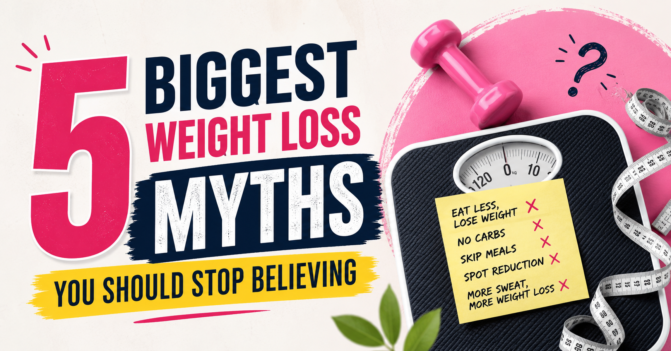
When it comes to weight loss, there is no shortage of advice on social media, television, and the internet. Unfortunately, much of this information is based on myths rather than science. Following these misconceptions can slow your progress, damage your health, and leave you feeling frustrated.
Let’s separate fact from fiction by exploring the five biggest weight loss myths and what you should do instead.
Many people completely eliminate carbohydrates when trying to lose weight. However, carbohydrates themselves are not the enemy.
Weight gain occurs when you consume more calories than your body burns, regardless of whether those calories come from carbohydrates, fats, or proteins.
Healthy carbohydrates provide:
Avoid: Sugary drinks, refined flour products, and processed snacks.
Many people believe that skipping meals or eating extremely little will help them lose weight faster.
Eating too little can actually:
Instead of starving yourself, focus on eating balanced meals that include:
A sustainable calorie deficit is much more effective than crash dieting.
Running, cycling, and walking are excellent forms of exercise, but they are not the complete solution.
Strength training plays an equally important role.
Benefits of strength training include:
The ideal exercise routine includes:
Many people perform endless crunches hoping to lose belly fat or do arm exercises to reduce arm fat.
Spot reduction is a myth.
Your body loses fat overall, not from one specific area. Genetics largely determine where fat is stored and where it is lost first.
To reduce body fat:
Eventually, fat loss occurs throughout the body.
Social media often promotes dramatic transformations in just a few weeks.
Healthy weight loss takes time.
Experts generally recommend losing around 0.5 to 1 kilogram per week for most adults, although individual results vary depending on factors such as starting weight, diet, activity level, and medical conditions.
Rapid weight loss often results in:
The goal should be building healthy habits that last a lifetime.
Instead of following myths, focus on these evidence-based habits:
Weight loss isn’t about following extreme diets or believing popular myths. It’s about creating healthy habits that you can maintain over the long term. Understanding the truth behind these common misconceptions can help you make informed decisions and achieve lasting results.
Remember, successful weight management is a journey—not a race. Consistency, balanced nutrition, regular exercise, and realistic expectations will always outperform quick fixes.
No. Whole-food carbohydrates like oats, fruits, vegetables, and whole grains are nutritious and can be part of a healthy weight loss plan.
No. Skipping meals may increase hunger, slow your metabolism, and make it harder to maintain healthy eating habits.
No. Spot reduction is not supported by scientific evidence. Overall fat loss comes from a combination of healthy eating, regular exercise, and a calorie deficit.
Both are important. Cardio helps burn calories, while strength training builds muscle and supports a healthy metabolism. Combining both offers the best long-term results.
For many adults, a gradual loss of about 0.5–1 kg per week is considered a sustainable pace, though this varies by individual.
What are the biggest weight loss myths?
The five biggest weight loss myths are:
The truth is that sustainable weight loss comes from balanced nutrition, regular exercise, adequate sleep, and consistent healthy habits rather than extreme dieting or shortcuts.