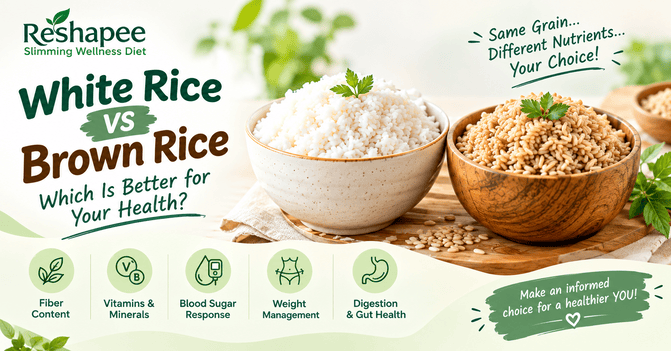
Which Rice is Good for Health White or Brown
Rice is a staple food in many Indian households. From dal-rice and rajma-chawal to pulao, khichdi, and curd rice, it is a regular part of everyday meals.
But when it comes to healthy eating, one question comes up frequently:
White rice or brown rice — which one is better?
Brown rice is often promoted as the healthier option because it contains more fiber and retains more of the grain’s natural components. White rice, on the other hand, is more processed, softer, quicker to cook, and often easier to digest.
The truth is that both white rice and brown rice can be included in a balanced diet. The better choice depends on your nutritional needs, digestion, meal composition, portion size, and personal preference.
Let’s understand the differences.
What Is the Difference Between White Rice and Brown Rice?
Both white rice and brown rice come from the same rice grain.
The main difference is how the grain is processed.
Brown rice is a whole grain. It retains the bran and germ along with the endosperm.
White rice has the bran and germ removed during milling, leaving mainly the starchy endosperm.
Because the bran and germ contain fiber, vitamins, minerals, and other plant compounds, brown rice generally contains more of these nutrients than white rice.
However, processing also gives white rice some practical advantages, such as a softer texture, shorter cooking time, and easier digestion for some people.
White Rice vs Brown Rice: Nutritional Difference
The exact nutritional values vary according to the rice variety and preparation method.
In general:
| Nutrient/Feature |
White Rice |
Brown Rice |
| Grain type |
Refined grain |
Whole grain |
| Fiber |
Lower |
Higher |
| Bran & germ |
Removed |
Retained |
| Texture |
Softer |
Chewier |
| Cooking time |
Usually shorter |
Usually longer |
| Digestion |
Often easier |
May be less comfortable for some people |
| Nutrient content |
Lower for some nutrients |
Generally higher for several nutrients |
| Glycemic response |
Often higher, but varies |
Often lower, but varies |
| Portion control |
Important |
Important |
The difference is not simply about calories. The amount of fiber and the overall composition of the meal also matter.
1. Brown Rice Contains More Fiber
One of the biggest nutritional differences between the two is fiber.
Because brown rice retains the bran layer, it generally contains more dietary fiber than white rice.
Fiber can help:
- Support normal bowel function
- Increase feelings of fullness
- Support a healthy gut
- Help make meals more satisfying
- Contribute to a healthy overall eating pattern
This can be particularly useful for people trying to increase their daily fiber intake.
However, suddenly increasing fiber can cause bloating or digestive discomfort in some people. If your current diet is low in fiber, increase it gradually and drink enough fluids.
2. Brown Rice Retains More Nutrients
The bran and germ contain various vitamins, minerals, and plant compounds.
Brown rice therefore generally provides more nutrients such as:
White rice contains fewer nutrients naturally because the bran and germ have been removed.
However, some white rice products are fortified or enriched with selected nutrients after processing. Therefore, the nutritional profile can vary between products.
3. What About Blood Sugar?
This is one of the most common reasons people choose brown rice.
Brown rice generally has more fiber and may produce a lower blood glucose response than some varieties of white rice. However, the glycemic index of rice varies considerably depending on the variety, cooking method, processing, and serving.
Therefore, it is not accurate to say that:
“Brown rice never raises blood sugar.”
It can still raise blood glucose because it is a carbohydrate-containing food.
For people concerned about blood sugar, the whole meal matters.
For example, rice eaten with:
- Dal
- Beans
- Vegetables
- Curd
- Paneer
- Eggs
- Fish
- Chicken
may produce a different response than eating a large bowl of plain rice by itself.
Portion size also matters.
4. Is Brown Rice Better for Weight Loss?
Brown rice is not a magic weight-loss food.
Simply replacing white rice with brown rice does not automatically cause weight loss.
Weight management depends on the overall dietary pattern, calorie intake, protein intake, fiber intake, physical activity, sleep, and many other factors.
However, brown rice can be useful because its higher fiber content may help some people feel fuller after meals.
For weight management, focus on the whole plate, not just the type of rice.
A balanced meal can include:
½ plate: vegetables and salad
¼ plate: protein source
¼ plate: rice or another grain/starchy food
The exact proportions should be individualized according to your energy requirements and health goals.
5. When Can White Rice Be a Practical Choice?
White rice is sometimes unnecessarily demonized.
There are situations where it can be a practical food choice.
Easier digestion
Because white rice contains less fiber, some people find it easier to digest.
It may be useful during periods when a person needs a lower-fiber diet, depending on the medical situation and professional advice.
Sensitive digestion
People experiencing certain digestive symptoms may find lower-fiber foods more comfortable.
However, persistent digestive symptoms should not simply be managed by eliminating foods. A healthcare professional should evaluate ongoing symptoms.
Higher-energy requirements
People with high energy requirements, such as some athletes or individuals with physically demanding routines, may comfortably include white rice as part of a balanced diet.
The choice depends on the person’s overall nutrition plan.
6. Does Brown Rice Cause Gas or Bloating?
It can in some people.
Brown rice contains more fiber than white rice. If someone suddenly increases their fiber intake, they may experience:
- Bloating
- Gas
- Abdominal discomfort
- Changes in bowel movements
This does not necessarily mean brown rice is unhealthy or unsuitable.
You can try:
- Increasing fiber gradually
- Drinking adequate fluids
- Starting with smaller portions
- Eating rice with other easily tolerated foods
- Monitoring your individual response
If significant digestive symptoms continue, speak with a doctor or registered dietitian.
7. Which Rice Is Better for Diabetes?
There is no single rice that is automatically suitable for everyone with diabetes.
Brown rice may be useful because it generally contains more fiber and may have a lower glycemic response than some white rice varieties.
But portion size and the entire meal remain important.
For example, instead of having a very large serving of rice alone, consider combining a moderate portion of rice with:
- Dal
- Chickpeas
- Rajma
- Vegetables
- Salad
- Curd
- Paneer
- Eggs
- Fish or chicken
Protein, fiber, and fat can influence how quickly carbohydrates are digested and absorbed.
People with diabetes should individualize carbohydrate portions based on their medication, glucose response, activity level, and advice from their healthcare team.
8. Is Brown Rice Always Healthier?
Not necessarily.
Brown rice has nutritional advantages, particularly its higher fiber content and retention of the bran and germ.
But “healthier” does not mean “better for every person in every situation.”
For example:
- Someone with a high-fiber diet may already be meeting their fiber needs.
- Someone with digestive problems may tolerate white rice better.
- Someone who enjoys white rice may be more consistent with a balanced eating pattern when they are allowed to include it.
- Someone looking to increase whole-grain intake may benefit from choosing brown rice more often.
The best diet is one that meets nutritional needs and can be followed consistently.
9. Portion Size Matters More Than Many People Think
Whether you eat white rice or brown rice, portion size matters.
A large portion of any carbohydrate-rich food can contribute significantly to total calorie intake.
Instead of completely eliminating rice, consider adjusting the portion.
For example:
Instead of:
A large bowl of plain rice with very little protein or vegetables.
Try:
A moderate portion of rice + dal/other protein + plenty of vegetables + salad/curd as appropriate.
This creates a more balanced meal.
10. How to Make Your Rice Meal Healthier
You do not have to completely change the type of rice you eat to improve your meal.
Try these simple strategies:
Add protein
Pair rice with:
- Dal
- Rajma
- Chole
- Paneer
- Tofu
- Eggs
- Fish
- Chicken
- Curd
Add vegetables
Include cooked vegetables, mixed vegetables, salad, or other vegetables according to your meal.
Watch the portion
A balanced portion is generally more useful than completely avoiding rice.
Choose cooking methods wisely
Avoid making rice-based meals unnecessarily high in calories by adding excessive oil, butter, or cream.
Add variety
You can alternate between:
- Brown rice
- White rice
- Hand-pounded rice
- Parboiled rice
- Other whole grains
Variety can make healthy eating more enjoyable and sustainable.
11. What About Basmati Rice?
Basmati rice is popular in Indian cooking and is available in both white and brown varieties.
The glycemic response of rice can vary according to the variety and cooking method. Some basmati rice varieties may have a lower glycemic index than certain other rice varieties.
However, basmati rice is still a carbohydrate source, and portion size remains important.
If you enjoy basmati rice, there is no need to eliminate it simply because you are trying to eat healthily.
12. What About Rice for Weight Loss?
If you are trying to lose weight, you do not necessarily need to stop eating rice.
A sustainable weight-loss diet can include rice.
The important questions are:
- How much rice are you eating?
- What are you eating with it?
- Are you getting enough protein?
- Are you eating enough vegetables and fiber?
- What is your total calorie intake?
- Are you physically active?
- Can you follow the eating pattern consistently?
For many people, portion control and meal balance are more practical than complete rice avoidance.
13. White Rice vs Brown Rice: Which Should You Choose?
Rather than asking which rice is universally “better,” consider your individual situation.
Brown rice may be useful if:
- You want to increase whole-grain intake.
- You need more dietary fiber.
- You enjoy its texture and taste.
- You tolerate higher-fiber foods comfortably.
- You want more naturally occurring nutrients from the whole grain.
White rice may be useful if:
- You prefer its taste and texture.
- You digest it more comfortably.
- You need a lower-fiber food temporarily.
- You have higher carbohydrate or energy needs and it fits your overall meal plan.
- Brown rice is simply not practical or enjoyable for you.
There is no requirement that every healthy diet must contain brown rice.
14. Can You Eat Both?
Absolutely.
You can include both white and brown rice in your diet.
For example:
Monday: Brown rice with dal and vegetables
Tuesday: White basmati rice with rajma and salad
Wednesday: Brown rice with paneer and vegetables
Thursday: White rice with dal, vegetables and curd
The goal is not perfection.
The goal is a balanced and sustainable eating pattern.
15. A Simple Indian Balanced Rice Plate
A simple rice-based meal could look like:
Carbohydrate
A moderate portion of rice
Protein
Dal, beans, paneer, tofu, eggs, fish, or chicken
Vegetables
A generous serving of cooked vegetables or salad
Optional accompaniment
Curd or another suitable food according to your dietary needs
This combination can be much more nutritionally balanced than focusing only on whether the rice is white or brown.
White Rice vs Brown Rice: The Bottom Line
Brown rice and white rice can both be part of a healthy diet.
Brown rice has an advantage in terms of fiber and retention of the bran and germ, while white rice is softer, more refined, and often easier to digest.
For weight management and metabolic health, don’t focus exclusively on changing white rice to brown rice.
Instead, pay attention to:
- Portion size
- Protein
- Vegetables
- Fiber
- Overall calorie intake
- Cooking methods
- Physical activity
- Your individual health needs
Healthy eating is not about labeling one food as “good” and another as “bad.” It is about creating a balanced diet that works for your body and lifestyle.
If you are managing diabetes, digestive problems, or another health condition, your ideal carbohydrate choices and portions may need to be individualized.
Frequently Asked Questions
Is brown rice better than white rice for weight loss?
Brown rice contains more fiber, which may help with fullness, but eating brown rice alone does not cause weight loss. Overall calorie intake, meal composition, physical activity, and consistency are important.
Can I eat white rice while trying to lose weight?
Yes. White rice can be included in a weight-management diet when the portion fits your overall nutritional and calorie requirements.
Which rice has more fiber?
Brown rice generally contains more fiber because it retains the bran layer, while white rice has the bran and germ removed during milling.
Is brown rice good for diabetes?
Brown rice can be a useful whole-grain choice because it generally contains more fiber and may produce a lower glycemic response than some white rice varieties. However, portion size and the overall meal are also important for blood-glucose management.
Is white rice unhealthy?
No. White rice is a refined grain and contains less fiber than brown rice, but it can still be part of a balanced diet. The appropriate choice depends on individual nutritional needs and dietary context.
Can brown rice cause bloating?
Yes, it can cause bloating or gas in some people because it contains more fiber. Increasing fiber gradually and drinking adequate fluids may improve tolerance.
Can I eat rice every day?
Rice can be eaten regularly as part of a balanced diet. Focus on appropriate portions and pair it with protein, vegetables, and other nutrient-rich foods.
Which is better: brown rice or white rice?
There is no single answer for everyone. Brown rice provides more fiber and retains more of the grain’s natural components, while white rice may be easier to digest and may suit certain dietary situations. Your individual nutritional needs should guide the choice.
Final Message
You don’t have to fear rice to eat healthily.
Whether you choose white rice, brown rice, or a combination of both, focus on balance, portion control, nutritional variety, and consistency.
At Reshapee Slimming Wellness Diet, nutrition is not about unnecessary food restrictions. A sustainable eating plan should fit your health goals, food preferences, lifestyle, and individual nutritional requirements.