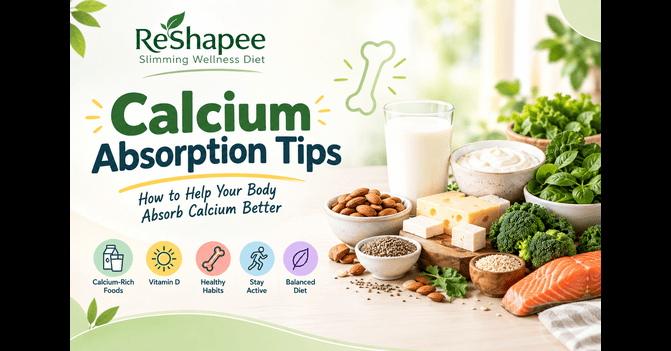
Calcium Absorption Tips: How to Help Your Body Absorb Calcium Better
Calcium is one of the most important minerals your body needs for strong bones and teeth. It also plays an important role in normal muscle movement, nerve signaling, blood clotting, and other body functions. Almost all of the body’s calcium is stored in the bones and teeth.
But getting enough calcium from your diet is only part of the picture. Your body also needs to absorb the calcium effectively.
Several factors can influence calcium absorption, including vitamin D status, the type of food providing calcium, the amount consumed at one time, and certain compounds naturally present in some foods.
In this article, we will discuss practical calcium absorption tips, calcium-rich foods, the role of vitamin D, calcium absorption inhibitors, and when calcium supplements may be appropriate.
Why Is Calcium Important?
Calcium is best known for its role in maintaining strong bones and teeth. However, its functions go beyond bone health.
Your body uses calcium for:
Because the body stores most of its calcium in bones, maintaining adequate calcium intake throughout life is important for skeletal health.
Calcium Intake vs. Calcium Absorption
Simply eating a calcium-rich food does not mean that all of its calcium will enter your bloodstream.
The amount absorbed depends on several factors. For example, calcium absorption can vary considerably between different foods because some foods contain compounds that can bind calcium and reduce its absorption.
This is why a balanced diet containing a variety of calcium sources is more useful than focusing on just one food.
1. Include Calcium-Rich Foods Regularly
One of the simplest ways to support calcium status is to include calcium-containing foods regularly throughout your diet.
Dairy foods
Milk, yogurt, and cheese are well-known sources of calcium. According to the NIH Office of Dietary Supplements, calcium absorption from dairy foods is approximately 30%.
Examples include:
-
Milk
-
Curd or yogurt
-
Paneer
-
Cheese
-
Buttermilk
For people who tolerate dairy products, these can be convenient sources of dietary calcium.
Calcium-rich non-dairy foods
You do not have to rely only on dairy products.
Other sources include:
-
Tofu made with calcium sulfate
-
Calcium-fortified soy or other plant-based beverages
-
Calcium-fortified foods
-
Sesame seeds
-
Certain leafy vegetables
-
Broccoli
-
Canned sardines or salmon with edible bones
Some plant-based foods can provide calcium, although the amount your body absorbs can vary depending on their composition.
2. Don’t Forget Vitamin D
Vitamin D plays a particularly important role in calcium absorption.
The body needs vitamin D to help absorb calcium in the intestine and maintain adequate calcium levels for normal bone mineralization.
Good sources of vitamin D can include:
However, sunlight exposure does not produce the same amount of vitamin D for everyone. Factors such as skin pigmentation, age, season, location, clothing, and sunscreen use can affect vitamin D production.
Therefore, avoid assuming that a fixed number of minutes of sunlight will meet everyone’s vitamin D needs.
If you are concerned about vitamin D deficiency, discuss testing and supplementation with your doctor or qualified healthcare professional.
3. Choose Your Calcium Sources Wisely
Not all calcium-containing foods have the same calcium bioavailability.
For example, the NIH notes that calcium absorption from spinach is relatively low because spinach contains a high amount of oxalic acid. In contrast, calcium absorption from milk is considerably higher.
This does not mean that spinach is an unhealthy food.
Spinach provides many other nutrients and can absolutely be part of a healthy diet. It simply means that you should not depend on spinach alone as your main calcium source.
Other vegetables such as broccoli, kale, and cabbage have better calcium bioavailability than high-oxalate vegetables such as spinach.
Some plant foods contain compounds such as oxalic acid and phytic acid, which can bind minerals and reduce calcium absorption.
Foods containing these compounds are not necessarily foods you need to avoid.
Instead, focus on dietary variety.
For example, rather than relying exclusively on spinach for calcium, combine different calcium sources such as:
Eating a varied diet generally helps you obtain nutrients from multiple sources.
5. Spread Calcium Intake Through the Day
Your body does not necessarily absorb the same percentage of calcium regardless of how much you consume at one time.
For calcium supplements, the NIH states that absorption is highest when doses contain 500 mg or less of calcium at one time.
This is particularly relevant for people who have been advised to take calcium supplements.
For example, if a healthcare professional recommends 1,000 mg of supplemental calcium per day, it may be preferable to divide it into separate doses rather than taking the entire amount at once.
Do not automatically take calcium supplements just because you want stronger bones. Your individual calcium requirement depends on factors such as age, diet, sex, life stage, and health status.
6. Understand the Difference Between Calcium Supplements
The two most common forms of calcium supplements are:
Calcium carbonate
Calcium carbonate is generally absorbed best when taken with food.
Calcium citrate
Calcium citrate can be absorbed with or without food and may be better absorbed than calcium carbonate in people with low stomach acid.
The right supplement depends on the individual’s nutritional needs, diet, medications, health conditions, and digestive tolerance.
If you have been advised to take a calcium supplement, check the elemental calcium amount on the Supplement Facts label rather than simply looking at the total weight of the calcium compound.
7. Don’t Take Calcium and Iron Supplements Together Without Advice
Calcium can interfere with the absorption of iron when the two supplements are taken together.
If you take both calcium and iron supplements, ask your doctor or dietitian about appropriate timing rather than taking them at the same time automatically.
This is particularly important for people taking iron supplements for diagnosed or suspected iron deficiency.
8. Maintain a Balanced Diet
Calcium absorption is only one part of maintaining healthy bones.
A bone-supportive diet should provide a variety of nutrients, including:
Instead of focusing on a single “bone-strengthening” food, aim for a balanced eating pattern containing vegetables, fruits, whole grains, adequate protein, dairy or suitable alternatives, nuts and seeds, and other nutrient-rich foods.
9. Stay Physically Active
Nutrition and physical activity work together when it comes to bone health.
Weight-bearing and resistance exercises can provide mechanical stimulus to bones and muscles.
Examples include:
-
Brisk walking
-
Strength training
-
Stair climbing
-
Dancing
-
Bodyweight exercises
Your exercise routine should be appropriate for your age, fitness level, and health condition.
If you have osteoporosis, a history of fractures, or another medical condition affecting your bones, speak with your healthcare professional before starting a new exercise program.
10. What About Tea and Coffee?
Tea and coffee can be part of a balanced diet, but caffeine intake may have a small effect on calcium absorption. The NIH notes that caffeine can reduce calcium absorption to a small extent.
This does not mean that everyone needs to stop drinking tea or coffee.
Instead, focus on your overall calcium intake and dietary pattern.
If you regularly consume large amounts of tea or coffee while getting very little calcium from your diet, improving your overall diet may be more useful than simply eliminating one beverage.
11. Don’t Depend on One Food for Calcium
A common nutrition mistake is believing that one particular food is the “best” way to get calcium.
For example:
“I eat spinach every day, so I don’t need other calcium sources.”
Not necessarily.
The amount of calcium present in a food and the amount your body can absorb are not always the same.
A better approach is to include a variety of calcium-rich foods throughout the week.
For an Indian diet, this may include combinations such as:
The exact combination should be adjusted according to your dietary preferences and nutritional requirements.
How Much Calcium Do You Need?
Calcium requirements vary according to age and life stage.
For example, adults generally require around 1,000–1,200 mg of calcium per day, depending on age and sex.
Children, teenagers, pregnant or breastfeeding women, and older adults may have different requirements.
Instead of trying to calculate your requirement based only on a social-media post or Web Story, consider your overall diet and individual nutritional needs.
Signs That You May Need to Review Your Calcium Intake
Low calcium intake does not always produce obvious symptoms immediately.
Your body tightly regulates calcium levels in the blood, and bones can act as a reservoir for calcium. Therefore, consistently inadequate intake can be a concern even when you feel normal.
You may want to discuss your calcium intake with a healthcare professional if you:
-
Consume very little dairy or calcium-rich food
-
Follow a restrictive diet
-
Have been diagnosed with low bone density
-
Have a history of fractures
-
Have certain digestive or absorption problems
-
Have been advised to take calcium supplements
-
Take medications that may affect bone or mineral metabolism
Calcium Absorption: Common Mistakes to Avoid
Mistake 1: Taking a large calcium supplement dose all at once
Smaller supplemental doses may be absorbed more efficiently than very large doses. The NIH recommends considering doses of 500 mg or less at one time.
Mistake 2: Ignoring vitamin D
Vitamin D is essential for efficient intestinal calcium absorption.
Mistake 3: Depending only on spinach for calcium
Spinach contains calcium, but its high oxalate content makes its calcium less bioavailable than calcium from many other foods.
Mistake 4: Taking supplements without checking your diet
More calcium is not always better. Excessive supplementation can have unwanted effects, and your nutritional needs should be considered before adding supplements.
Mistake 5: Ignoring overall lifestyle
Healthy bones depend on more than calcium alone. Adequate nutrition, physical activity, vitamin D status, and other lifestyle factors all matter.
A Simple Calcium-Friendly Daily Approach
You can support your calcium intake without making your diet complicated.
Breakfast
Choose a calcium-containing food such as milk, yogurt, or a calcium-fortified alternative.
Lunch
Include vegetables, a protein source, and a calcium-containing food such as curd or paneer if suitable for your diet.
Evening
Choose a nutrient-rich snack such as yogurt, nuts, or another appropriate calcium-containing food.
Dinner
Include vegetables, protein, and a suitable calcium source.
Throughout the day
Stay physically active and maintain a balanced diet.
The goal is not to create a “perfect calcium diet.” The goal is to consistently meet your nutritional needs through a varied eating pattern.
Final Takeaway
Calcium absorption matters just as much as calcium intake.
To support your body’s calcium use:
-
Include calcium-rich foods regularly.
-
Maintain adequate vitamin D.
-
Eat a varied diet instead of relying on one food.
-
Be aware that oxalates and phytates can reduce calcium absorption from certain plant foods.
-
If using calcium supplements, avoid taking unnecessarily large amounts at once.
-
Ask your healthcare professional about supplement timing if you also take iron or other medications.
-
Include regular weight-bearing or resistance exercise.
-
Focus on your overall dietary pattern rather than one nutrient or food.
Most people can obtain calcium through a well-planned diet, while supplements may be useful in certain situations. If you are unsure whether you are meeting your calcium or vitamin D needs, a registered dietitian or doctor can help assess your individual diet and health requirements.
Frequently Asked Questions
Does vitamin D increase calcium absorption?
Yes. Vitamin D promotes calcium absorption in the intestine and helps maintain calcium levels needed for normal bone mineralization.
Is spinach a good source of calcium?
Spinach contains calcium, but much of it is poorly absorbed because spinach is high in oxalic acid. Other vegetables such as broccoli, kale, and cabbage generally have better calcium bioavailability.
Can I take calcium supplements on an empty stomach?
It depends on the type. Calcium carbonate is absorbed best with food, while calcium citrate can be taken with or without food.
Is it better to take all my calcium at once?
For calcium supplements, absorption is highest with doses of 500 mg or less at one time. If you have been advised to take a larger amount, ask your healthcare professional whether splitting the dose would be appropriate.
Can I get enough calcium without dairy?
Yes. Depending on your diet, calcium can also come from fortified plant-based beverages and foods, tofu made with calcium sulfate, certain vegetables, sesame and other foods. Your overall diet should be planned to provide adequate calcium.
Should everyone take a calcium supplement?
No. Supplements are not automatically necessary for everyone. It is generally preferable to meet nutritional needs through food when possible, with supplements used when appropriate based on individual dietary intake and health needs.