Calcium Needs in Adult Women: Daily Requirement & Best Sources
Calcium is one of the most essential minerals for the human body, especially for women in their adult years. From maintaining strong bones to supporting muscle and nerve function, calcium plays a vital role in overall health. However, many women fail to meet their daily calcium requirements, increasing their risk of long-term health problems.
Why Calcium is Important for Adult Women
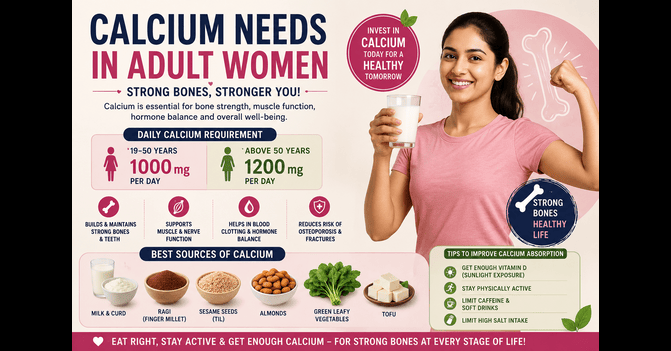
Calcium is best known for its role in building and maintaining strong bones and teeth. About 99% of the body’s calcium is stored in bones. The remaining 1% is crucial for functions such as:
-
Muscle contraction
-
Nerve signaling
-
Blood clotting
-
Hormonal balance
As women age, calcium becomes even more important due to hormonal changes that affect bone density.
Daily Calcium Requirement for Women
The calcium requirement varies with age:
After menopause, women are at a higher risk of bone loss due to decreased estrogen levels, making adequate calcium intake essential.
Signs of Calcium Deficiency
A lack of calcium may not show immediate symptoms, but over time it can lead to:
Long-term deficiency can lead to conditions like Osteoporosis, where bones become fragile and more prone to breaking.
Best Dietary Sources of Calcium
Including calcium-rich foods in your daily diet is the best way to meet your needs:
Dairy Sources
-
Milk
-
Curd (yogurt)
-
Cheese
Vegetarian Sources
Fortified Foods
Tips to Improve Calcium Absorption
Getting calcium is important—but absorbing it is equally crucial. Here’s how to maximize absorption:
Special Considerations for Women
During Pregnancy and Lactation
Calcium needs increase to support the baby’s bone development.
During Menopause
Bone loss accelerates, making calcium intake and lifestyle changes critical.
Should You Take Calcium Supplements?
While food is the best source, supplements may be needed if dietary intake is insufficient. However, supplements should only be taken under professional guidance to avoid excess intake, which may lead to kidney stones or other complications.
Conclusion
Calcium is not just important—it is essential for women’s health at every stage of adulthood. A balanced diet, healthy lifestyle, and awareness of your body’s needs can help prevent deficiencies and protect against serious bone-related conditions.
Prioritizing calcium today means investing in stronger, healthier years ahead.