- Best Dietitian & Nutritionist in Ahmedabad | Reshapee Slimming Wellness Diet
- +91-72848 25055
- reshapeslimming.diet@gmail.com



Iron Rich Foods: Best Plant-Based Sources of Iron for a Healthy Diet
September 7, 2026
11 Calcium Absorption Tips: How to Help Your Body Absorb Calcium Better
September 22, 2026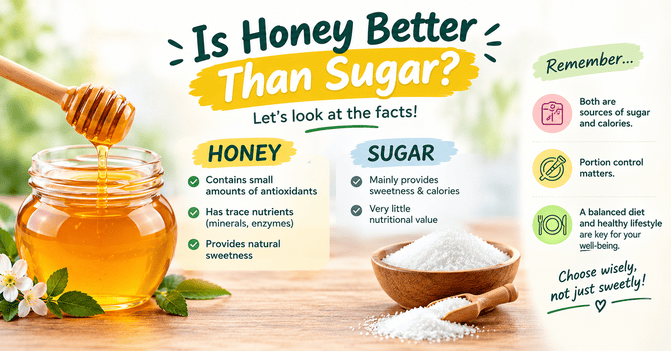
Table of Contents
ToggleIs Honey Better Than Sugar? The Truth About Honey and Sugar
Honey is often considered a healthier alternative to white sugar because it is natural and contains small amounts of antioxidants and other compounds. But does that mean you can use honey freely without worrying about sugar or calories?
Not quite.
Honey and table sugar are different foods, but both contribute sugar and calories to the diet. Honey does contain small amounts of minerals, enzymes and plant compounds such as polyphenols, while refined table sugar provides very little nutritional value beyond energy. However, honey is still an added sugar when it is added to foods or drinks.
So, is honey better than sugar?
The answer depends on what you mean by “better.” Honey may have some nutritional advantages over refined sugar, but it should still be consumed in moderation.
Honey vs Sugar: What’s the Difference?
What is table sugar?
Regular white table sugar is primarily sucrose. It is commonly added to tea, coffee, sweets, desserts, beverages and many processed foods.
Refined sugar provides energy but very little in the way of vitamins, minerals, fibre or other beneficial compounds.
What is honey?
Honey is produced by bees from flower nectar. Its composition varies depending on the floral source, geographical origin and processing.
Honey is mainly made up of carbohydrates, particularly fructose and glucose. It can also contain small amounts of minerals, proteins, enzymes, amino acids and polyphenols.
This is one reason honey may offer some nutritional advantages compared with refined table sugar.
But there is an important point:
Natural does not automatically mean calorie-free or suitable in unlimited amounts.
Is Honey Healthier Than White Sugar?
Honey can be considered nutritionally more complex than refined white sugar because it contains small amounts of compounds that are largely absent from table sugar.
Research has identified various polyphenols and other antioxidant compounds in honey. However, the amount can vary considerably depending on the type and origin of honey.
This means that replacing a teaspoon of sugar with a small amount of honey can be a reasonable choice if you prefer the taste of honey.
However, this does not mean that adding large amounts of honey to your diet is healthy.
The overall amount of added sugar you consume still matters.
Does Honey Have More Nutrients Than Sugar?
Yes, honey contains some compounds that refined table sugar does not provide in meaningful amounts.
Depending on the variety, honey can contain:
-
Flavonoids
-
Small amounts of minerals
-
Enzymes
-
Amino acids
-
Other bioactive compounds
The exact nutritional composition varies from one honey to another.
But the quantities are generally small.
Therefore, honey should not be viewed as a major source of vitamins or minerals in your diet.
Think of honey primarily as a sweetener—not as a replacement for nutrient-rich foods such as fruits, vegetables, pulses, nuts and whole grains.
Does Honey Contain Sugar?
Yes.
Honey is predominantly composed of sugars, particularly fructose and glucose.
This is why the idea that honey is “sugar-free” is incorrect.
The American Heart Association includes honey among added sugars when it is added to foods or beverages.
So if you add honey to your tea, coffee, oatmeal or other foods, it contributes to your total added-sugar intake.
Does Honey Have Fewer Calories Than Sugar?
Honey is not a low-calorie food.
In fact, because honey is a concentrated source of sugars, it still contributes a significant amount of energy.
The American Heart Association notes that a tablespoon of honey contains about 64 calories.
The important issue is therefore not simply whether you choose honey or sugar.
It is also:
How much are you using?
For example, replacing one teaspoon of sugar with one teaspoon of honey is very different from adding several tablespoons of honey every day.
Is Honey Better for Weight Loss?
This is where many misconceptions arise.
Honey does NOT directly burn body fat.
Simply replacing sugar with honey does not automatically cause weight loss.
Weight management depends on your overall energy intake, food quality, portion sizes, physical activity, sleep and other lifestyle factors.
If you replace sugar with an equal or greater amount of honey but continue consuming excessive calories overall, you should not expect the substitution alone to produce significant weight loss.
For people trying to lose weight, the better approach is usually to reduce the overall dependence on very sweet foods and drinks, rather than simply switching from one sweetener to another.
Can Honey Be Part of a Weight-Loss Diet?
Yes.
You do not necessarily have to completely eliminate honey if you enjoy it.
The key is portion control.
For example, a small amount of honey can be used occasionally in:
-
Herbal tea
-
Plain yogurt
-
Oatmeal
-
Homemade smoothies
-
Homemade dressings
-
Whole-grain breakfast foods
But adding several spoonfuls of honey to drinks and foods throughout the day can quickly increase your total sugar and calorie intake.
A weight-loss diet does not have to mean avoiding every sweet food.
It means learning how to manage frequency, portion size and overall dietary balance.
Is Honey Better for People With Diabetes?
This question needs particular care.
Honey is still a source of sugar and carbohydrates, so it should not be considered a diabetes-friendly food simply because it is natural.
Some research has investigated whether honey may have different metabolic effects from other sweeteners, and clinical studies have reported mixed findings. A recent umbrella review of randomized trials found potential effects of honey on several cardiometabolic measures, but also reported adverse changes in some outcomes and emphasized the need to interpret the evidence carefully.
Therefore, people with diabetes or prediabetes should consider honey as part of their overall carbohydrate and added-sugar intake rather than assuming it is a free alternative to sugar.
If you have diabetes, the appropriate amount can depend on your overall meal pattern, medications, blood-glucose response and individual nutritional needs.
What About Honey and Blood Sugar?
Honey contains mainly simple sugars, so it can contribute to an increase in blood glucose.
Its glycemic index can vary substantially depending on the botanical source and composition. A review reported a wide range of glycemic index values for different honeys.
This means that the type of honey, portion size and what you eat alongside it can all matter.
For better blood-sugar management, focus on the whole meal, including protein, fibre-rich foods and appropriate portions, rather than relying on honey as a “healthy sugar.”
Are the Antioxidants in Honey Beneficial?
Honey contains various plant-derived compounds, including polyphenols and flavonoids, that contribute to its antioxidant activity.
Research has investigated honey for potential effects on several health outcomes. A review of clinical trials found some potentially beneficial effects, but researchers also noted limitations in the available evidence and differences between studies.
So it is reasonable to say:
Honey contains antioxidant compounds.
But it would be an exaggeration to say:
“Eating honey will prevent disease.”
Honey should complement a nutritious diet—not replace fruits, vegetables and other foods that provide much larger amounts of essential nutrients and fibre.
Honey vs Sugar: Which One Should You Choose?
There is no need to think of the choice as simply “healthy” versus “unhealthy.”
Consider the following:
| Factor | Honey | White Sugar |
|---|---|---|
| Sweet taste | Yes | Yes |
| Contains sugar | Yes | Yes |
| Provides calories | Yes | Yes |
| Antioxidant compounds | Some | Very little |
| Trace nutrients | Small amounts | Minimal |
| Added sugar when added to foods/drinks | Yes | Yes |
| Suitable for unlimited use | No | No |
| Portion control important | Yes | Yes |
The biggest practical takeaway is:
Honey may offer more bioactive compounds than refined sugar, but both should be used thoughtfully.
How Much Honey Should You Eat?
There is no single amount that is ideal for everyone.
Your appropriate intake depends on your overall diet, calorie requirements, activity level, health conditions and how much other added sugar you consume.
The American Heart Association recommends keeping added sugar limited overall and gives a reference of no more than about 6 teaspoons (25 g) per day for most women and 9 teaspoons (36 g) for men. These recommendations apply to added sugars collectively, rather than giving honey a separate allowance.
Remember that added sugar can come from many sources, including:
-
Sugar in tea or coffee
-
Sweets and desserts
-
Biscuits
-
Sweetened beverages
-
Packaged foods
-
Honey
-
Syrups
-
Sweetened breakfast foods
So the goal should not be to replace every source of sugar with honey.
Instead, try to reduce unnecessary sweetness overall.
5 Simple Ways to Reduce Added Sugar
1. Gradually reduce sugar in tea and coffee
Instead of making a sudden change, reduce the amount gradually. Your taste buds can adapt to less sweetness over time.
2. Choose whole fruit instead of fruit-flavoured sweets
Whole fruits provide fibre, water and various micronutrients along with naturally occurring sugars.
3. Avoid sugary drinks
Soft drinks, sweetened juices and other sugary beverages can add significant amounts of sugar without making you feel particularly full.
4. Read food labels
Look for added sugars on packaged foods. Honey, syrups and several other sweeteners can also contribute to added-sugar intake.
5. Use honey for flavour—not as a health remedy
If you enjoy honey, use a small amount because you like the taste rather than because you believe it will burn fat or “detox” your body.
Common Myths About Honey
Myth 1: Honey burns fat
Fact: There is no reason to treat honey as a fat-burning food. Weight loss depends on overall dietary and lifestyle factors.
Myth 2: Honey is sugar-free
Fact: Honey is primarily composed of sugars.
Myth 3: You can eat unlimited honey because it is natural
Fact: Honey still provides calories and sugar.
Myth 4: Honey is always better for diabetes
Fact: Honey can raise blood glucose and should be considered within the overall diet of someone with diabetes.
Myth 5: Replacing sugar with honey automatically causes weight loss
Fact: Simply changing the sweetener does not guarantee weight loss.
So, Is Honey Better Than Sugar?
The most accurate answer is:
Honey may have some nutritional advantages over refined white sugar because it contains small amounts of antioxidant compounds and other bioactive substances. However, honey is still a concentrated source of sugar and calories.
Therefore, if you enjoy honey, there is no need to fear a small amount.
But don’t treat it as a “healthy unlimited sweetener.”
For weight management and overall health, the bigger goal is to build a diet based mainly on:
-
Vegetables
-
Fruits
-
Whole grains
-
Pulses and legumes
-
Nuts and seeds
-
Adequate protein
-
Healthy fats
-
Minimally processed foods
And keep highly sweetened foods and drinks—including those sweetened with honey—to moderate amounts.
Final Takeaway
🍯 Honey can be a better choice than refined sugar in some situations because it contains small amounts of bioactive compounds.
But…
Honey is still sugar.
It still contributes calories, and consuming large amounts will not help with weight management.
So instead of asking only:
“Honey or sugar?”
A better question is:
“How much added sugar am I consuming overall?”
For a healthier lifestyle, focus on portion control, balanced meals and consistent eating habits rather than looking for a single “healthy” sweetener.
Frequently Asked Questions
Is honey healthier than white sugar?
Honey contains small amounts of antioxidants and other compounds that refined sugar largely lacks, but both provide sugar and calories. Honey should still be consumed in moderation.
Can honey help with weight loss?
Honey does not directly burn body fat. Weight loss depends on your overall energy intake, diet quality, physical activity and lifestyle habits.
Can I replace sugar with honey?
You can use honey instead of sugar if you prefer its flavour, but remember that honey is still an added sugar when used in foods or drinks.
Is honey safe for people with diabetes?
Honey can raise blood glucose and should not be considered a sugar-free or unlimited alternative. People with diabetes should account for it within their overall carbohydrate and added-sugar intake.
Is raw honey healthier than regular honey?
Honey composition varies by source and processing. While less-processed honey may retain more naturally occurring compounds, “raw” does not mean calorie-free or suitable for unlimited consumption.
What is more important for weight loss: honey or sugar?
Neither honey nor sugar is a magic weight-loss food. The more important factors are your overall calorie intake, portion sizes, food quality, physical activity and consistency.