- Best Dietitian & Nutritionist in Ahmedabad | Reshapee Slimming Wellness Diet
- +91-72848 25055
- reshapeslimming.diet@gmail.com

6 Common Signs of Iron Deficiency You Should Not Ignore
November 23, 2026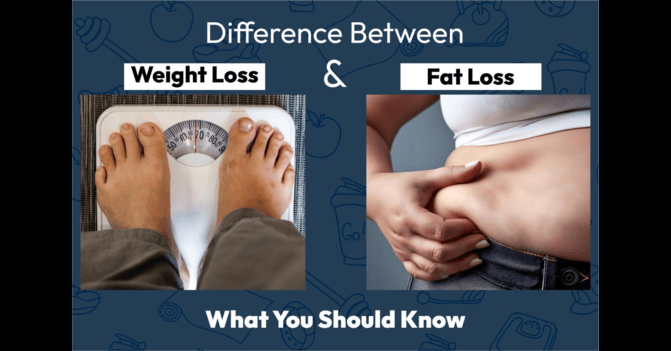
Table of Contents
ToggleWeight Loss vs Fat Loss Difference : 12 Key Differences You Should Know
When people start a diet or exercise programme, their first goal is usually to reduce the number on the weighing scale. However, have you ever wondered whether losing weight always means losing body fat?
The answer is No! Weight loss and fat loss are two different things.
You may notice a reduction in your body weight without losing much fat. Sometimes, the weight you lose may come from water, glycogen (stored carbohydrates), or even muscle mass.
On the other hand, you can lose body fat, improve your body shape and become healthier without seeing a significant change on the weighing scale.
Understanding the difference between weight loss and fat loss is essential for choosing the right nutrition and exercise strategy.
In this article, we will explain what weight loss and fat loss mean, their differences, why fat loss is important, and how to achieve healthy and sustainable results.
What Is Weight Loss?
Weight loss simply means a reduction in your total body weight.
Your body weight includes several components:
-
Body fat
-
Muscle mass
-
Water and body fluids
-
Bones
-
Organs
-
Glycogen stored in muscles and liver
-
Food and waste present in your digestive system
When you lose weight, the reduction can come from one or more of these components.
For example, when you follow a very restrictive diet, you may notice a quick reduction in body weight. However, this reduction may partly be due to water loss and glycogen depletion rather than actual fat loss.
Common reasons for weight loss include:
-
Reduced calorie intake.
-
Loss of excess body water.
-
Reduction in muscle mass.
-
Depletion of stored glycogen.
-
Reduction in body fat.
This is why a lower number on the weighing scale does not always indicate better health or improved body composition.
2. What Is Fat Loss?
Fat loss means reducing the amount of stored fat in your body while maintaining as much muscle mass as possible.
Your body stores fat in adipose tissue, which acts as an energy reserve and also supports several important functions.
Body fat helps with:
-
Energy storage.
-
Hormone production and regulation.
-
Insulation and temperature regulation.
-
Protection of internal organs.
-
Absorption of fat-soluble vitamins A, D, E and K.
However, excessive body fat, particularly excess visceral fat around internal organs, can increase the risk of several metabolic health problems.
During fat loss, your body uses stored fat as an energy source, generally when you consistently consume fewer calories than your body expends.
The goal should not be to eliminate body fat completely. Instead, it should be to maintain a healthy amount of body fat while preserving muscle mass.
Weight Loss vs Fat Loss: What Is the Difference?
Although these terms are often used interchangeably, they have different meanings.
|
Feature |
Weight Loss |
Fat Loss |
|---|---|---|
|
Meaning |
Reduction in total body weight |
Reduction in body fat |
|
What you lose |
Water, muscle and fat |
Primarily body fat |
|
Muscle mass |
May decrease |
Aim is to preserve it |
|
Body appearance |
May or may not change significantly |
Often improves body composition |
|
Measurement |
Weighing scale |
Body composition and measurements |
|
Long-term goal |
Lower body weight |
Healthier body composition |
The important difference: Weight loss tells you how much lighter you are, whereas fat loss tells you how much body fat you have reduced.
4. Why Is Fat Loss More Important Than Just Losing Weight?
A healthy body is not defined only by its weight.
Two people can have exactly the same body weight but completely different body compositions.
For example:
-
Person A may have higher body fat and lower muscle mass.
-
Person B may have lower body fat and higher muscle mass.
Even though their weighing scales show the same number, their body composition, fitness and metabolic health may differ.
Here are some reasons why focusing on healthy fat loss is beneficial.
A. Helps Improve Insulin Sensitivity
Excess visceral fat is associated with insulin resistance.
When the body becomes less responsive to insulin, blood glucose regulation becomes more difficult.
Reducing excess body fat through healthy nutrition and physical activity may help improve insulin sensitivity and support better blood sugar management.
B. Supports Heart Health
Excess body fat, particularly abdominal and visceral fat, is associated with an increased risk of cardiovascular problems.
A healthy weight-management programme can help improve several heart-health markers, including blood pressure and blood lipid levels.
C. Helps Maintain Muscle Mass
Muscles play an important role in movement, strength, physical performance and metabolic health.
Rapid weight loss through crash dieting may lead to muscle loss.
A balanced diet with sufficient protein and regular resistance exercise helps preserve muscle during weight management.
D. Supports Better Body Composition
Fat loss can help reduce waist circumference and improve the proportion of muscle to fat in your body.
This is why your clothes may become looser even when your weighing scale shows only a small change.
E. May Reduce the Risk of Metabolic Diseases
Excess abdominal fat is associated with conditions such as:
-
Type 2 diabetes
-
High blood pressure
-
Abnormal cholesterol levels
-
Fatty liver disease
-
Cardiovascular disease
Reducing excess body fat can help improve metabolic health, although individual results vary.
5. Can You Lose Weight Without Losing Fat?
Yes!
In fact, this happens more often than people realise.
Consider someone who follows a very low-calorie diet or a diet that severely restricts carbohydrates.
During the initial days, the weighing scale may show a rapid reduction.
Why?
When carbohydrate intake decreases, the body uses stored glycogen. Glycogen is stored along with water, so its depletion also causes water loss.
Additionally, insufficient calorie and protein intake can contribute to muscle loss.
Therefore, rapid weight reduction does not necessarily mean significant fat reduction.
Remember: Losing 3 kg on the weighing scale does not automatically mean you have lost 3 kg of body fat.
6. Can You Lose Fat Without Losing Weight?
Yes! This is known as body recomposition.
Body recomposition refers to reducing body fat while maintaining or increasing muscle mass.
For example:
Imagine your body weight remains around 70 kg, but you gradually lose body fat and gain some muscle.
You may notice:
-
Reduced waist circumference.
-
Better muscle definition.
-
Improved strength.
-
Clothes fitting more comfortably.
-
Improved physical fitness.
Your weighing scale may show very little change because changes in fat and muscle can offset each other.
This is why it is important not to judge your progress only by body weight.
7. How to Achieve Fat Loss Without Losing Muscle
Healthy fat loss requires a combination of nutrition, exercise and lifestyle changes.
Maintain a Balanced Calorie Deficit
A calorie deficit means consuming fewer calories than your body uses.
However, an extremely low-calorie diet is not the right approach.
A moderate, sustainable calorie deficit can help your body use stored energy while making it easier to maintain muscle mass and meet nutritional requirements.
Avoid crash diets, prolonged fasting without appropriate guidance and unnecessary food restrictions.
2. Include Adequate Protein
Protein is essential for muscle repair, recovery and maintenance.
When you are trying to lose fat, adequate protein intake becomes particularly important.
Include protein-rich foods such as:
-
Milk and curd.
-
Paneer.
-
Eggs.
-
Dal and pulses.
-
Chickpeas and beans.
-
Soybean and tofu.
-
Fish and chicken.
Your protein requirement depends on your age, body weight, activity level and health status.
3. Include Strength Training
Strength training is one of the most effective ways to preserve and build muscle.
You can include:
-
Squats.
-
Lunges.
-
Push-ups.
-
Dumbbell exercises.
-
Resistance band workouts.
-
Weight training.
Aim for regular resistance training, ideally at least twice a week, adjusting the exercises to your fitness level.
4. Do Not Ignore Cardiovascular Exercise
Cardiovascular exercise helps improve heart health, stamina and energy expenditure.
Some beneficial activities include:
-
Brisk walking.
-
Cycling.
-
Swimming.
-
Dancing.
-
Jogging.
-
Aerobic exercise.
Combining cardiovascular activity with strength training can support better overall fitness and body composition.
5. Eat Fibre-Rich Foods
Fibre supports digestive health, improves satiety and helps maintain healthy blood glucose levels.
Include:
-
Green leafy vegetables.
-
Seasonal fruits.
-
Oats.
-
Whole grains.
-
Beans and lentils.
-
Seeds.
-
Nuts.
A balanced diet containing sufficient fibre can make your fat-loss journey more manageable.
6. Get Adequate Sleep
Sleep is an important but often overlooked part of weight management.
Poor sleep can affect hunger and appetite-regulating hormones, increase food cravings and make healthy eating habits more difficult to maintain.
Try to get approximately 7–9 hours of sleep every night, depending on your individual needs.
7. Manage Stress
Chronic stress may affect appetite, sleep and eating behaviour.
Some people experience increased cravings and emotional eating during stressful periods.
You can manage stress through:
-
Yoga.
-
Walking.
-
Deep breathing.
-
Relaxation activities.
-
Maintaining a consistent daily routine.
8. How to Know Whether You Are Losing Fat or Just Weight?
Do not depend only on the weighing scale.
Measure Your Waist Circumference
Regularly measuring your waist can help track changes in abdominal size.
Measure under similar conditions each time, using the same anatomical location and technique.
2. Track Your Body Composition
A body composition assessment may provide estimates of body fat percentage, muscle mass and other measurements.
Methods such as bioelectrical impedance can be affected by hydration and other factors, so interpret results as estimates rather than exact measurements.
3. Observe How Your Clothes Fit
If your clothes become looser around the waist even when your body weight changes very little, it may indicate changes in body composition.
4. Monitor Your Strength and Fitness
If you are maintaining or improving your strength while gradually reducing body fat, that can be a positive sign.
5. Track Your Progress Over Time
Take progress photographs under similar lighting, clothing and posture conditions.
Avoid judging your progress based on daily fluctuations.
9. Common Mistakes That Prevent Healthy Fat Loss
Many people work hard but do not achieve sustainable results because of common dieting mistakes.
|
Common mistake |
Better approach |
|---|---|
|
Skipping meals unnecessarily |
Follow a balanced eating routine |
|
Eating very little |
Maintain an appropriate calorie deficit |
|
Avoiding carbohydrates completely |
Choose suitable portions of quality carbohydrates |
|
Doing only cardio |
Combine cardio with strength training |
|
Ignoring protein |
Include protein in regular meals |
|
Following detox diets |
Focus on balanced nutrition |
|
Checking weight several times daily |
Track weekly trends |
|
Expecting quick results |
Focus on gradual, sustainable progress |
10. How Much Fat Loss Is Healthy Per Week?
There is no single fat-loss target that is suitable for everyone.
The rate of weight reduction depends on several factors, including:
-
Starting body weight.
-
Age.
-
Body composition.
-
Physical activity.
-
Calorie intake.
-
Hormonal and metabolic health.
-
Medical conditions.
For many adults with overweight or obesity, a gradual weight-loss rate of approximately 0.25–1 kg per week may be reasonable, although individual recommendations can differ.
Remember that the amount of weight lost is not necessarily equal to the amount of fat lost.
Your goal should be to achieve sustainable progress without compromising muscle mass, energy levels or nutritional health.
11. Does Age Affect Fat Loss?
Yes, age can influence body composition and weight management.
As people get older, several changes may occur:
-
Gradual loss of muscle mass.
-
Changes in physical activity.
-
Alterations in hormone levels.
-
Changes in sleep patterns.
-
Differences in energy requirements.
Women may experience additional body-composition changes during perimenopause and menopause due to hormonal changes and ageing.
This does not mean fat loss becomes impossible after 40.
A protein-rich balanced diet, strength training, regular physical activity and good sleep can help support healthy body composition at every age.
12. Which Is Better: Weight Loss or Fat Loss?
If your goal is improving body composition and metabolic health, focusing on reducing excess body fat while preserving muscle mass is generally more useful than simply chasing a lower number on the weighing scale.
However, weight loss can also be an important health goal for people who have excess body weight.
The best approach is to focus on both:
-
Reduce excess body fat gradually.
-
Preserve muscle mass.
-
Maintain adequate nutrition.
-
Improve physical fitness.
-
Develop sustainable lifestyle habits.
Your health journey should be about improving your overall health, not simply becoming lighter.
Frequently Asked Questions (FAQs)
1. Is fat loss better than weight loss?
Fat loss while preserving muscle mass is generally a better body-composition goal. However, weight loss can also be beneficial when someone has excess body weight.
2. Can I lose belly fat without losing weight?
Yes. If you reduce body fat while maintaining or increasing muscle mass, your waist circumference may decrease without a significant change in total body weight. However, targeted belly-fat loss through specific exercises is not possible.
3. Does walking help with fat loss?
Yes. Regular walking increases energy expenditure and supports cardiovascular health. Combining walking with strength training and balanced nutrition can improve body composition.
4. Does skipping dinner help with fat loss?
Skipping dinner is not necessary for fat loss. What matters more is your overall energy intake, food quality and nutritional balance throughout the day.
5. Which is better for fat loss: cardio or weight training?
Both are beneficial. Cardio supports cardiovascular fitness and energy expenditure, while strength training helps preserve and build muscle. A combination of both is generally recommended.
6. Why is my weight not decreasing even though my body looks slimmer?
You may be losing body fat while maintaining or gaining muscle. Changes in water retention can also affect scale readings. Waist measurements, strength and body composition can provide additional information.
7. Can women over 40 lose body fat?
Absolutely! Women over 40 can improve body composition through appropriate nutrition, adequate protein, strength training, regular activity and sufficient sleep.
Conclusion: Focus on Fat Loss, Not Just the Number on the Scale
Weight loss and fat loss are not the same.
Weight loss represents a reduction in total body weight, whereas fat loss specifically refers to reducing stored body fat.
A healthy weight-management programme should focus on reducing excess fat while preserving muscle mass, maintaining nutritional balance and improving metabolic health.
Instead of becoming obsessed with the weighing scale, pay attention to your waist measurements, strength, energy levels, fitness and overall well-being.
Remember: The goal is not just to weigh less. The goal is to become healthier and stronger!
Article by Dietician Neelam Dhanaggar
15+ Years of Experience in Nutrition and Diet Consultation.
Reshapee Slimming Wellness Diet