- Best Dietitian & Nutritionist in Ahmedabad | Reshapee Slimming Wellness Diet
- +91-72848 25055
- reshapeslimming.diet@gmail.com



Protein Digestion-Why Your Protein Isn’t Being Absorbed
October 9, 2026
Early Signs of Prediabetes: 10 Warning Signs to Know
October 21, 2026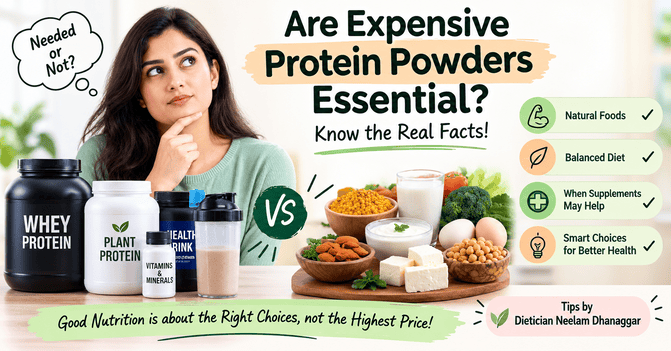
Table of Contents
ToggleAre Expensive Protein Powders and Health Supplements Essential for Good Health
Walk into any health store or browse online, and you will find a wide variety of expensive protein powders, health drinks, meal replacement products, and nutritional supplements. Their attractive packaging and marketing claims can make us believe that these products are essential for staying fit, building muscle, losing weight, or maintaining good health.
But is that really true?
Do you need to spend thousands of rupees on protein powders and health supplements to meet your nutritional requirements? Or can a balanced diet made with everyday foods provide most of the nutrients your body needs?
The answer is simple: expensive powders are not essential for everyone. Your nutritional needs, dietary habits, health conditions, and lifestyle determine whether a supplement is necessary.
Let’s understand the facts and learn how to make smarter nutrition choices.
1. What Are Protein Powders and Health Supplements?
Protein powders and nutritional supplements are products designed to provide specific nutrients in a convenient form.
Common examples include:
-
Protein powders: Whey, casein, soy, pea, and other plant-based protein powders.
-
Mass gainers: Products containing protein, carbohydrates, and sometimes added fats to increase calorie intake.
-
Meal replacement powders: Products formulated to replace a meal when used according to their instructions.
-
Health drinks: Powdered beverages that may contain protein, vitamins, minerals, sugar, or other ingredients.
-
Vitamin and mineral supplements: Products containing nutrients such as vitamin D, vitamin B12, iron, or calcium.
These products serve different purposes. A protein powder is not the same as a multivitamin, and neither automatically provides all the nutrients needed for a balanced diet.
The important question is not whether a product is expensive, but whether it meets a genuine nutritional need.
2. Can You Get Enough Protein from Natural Foods?
Yes! Many people can meet their protein requirements through a balanced diet containing protein-rich foods.
In India, there are several affordable protein sources that can be included in everyday meals.
Protein-rich Indian foods
| Food | Approximate protein content |
|---|---|
| 1 large egg | 6–7 g |
| 250 ml milk | 8 g |
| 100 g plain curd | 3–4 g |
| 100 g paneer | 15–20 g |
| 100 g cooked lentils (dal) | 7–9 g |
| 100 g cooked chickpeas | 8–9 g |
| 100 g cooked soybeans | 16–18 g |
| 100 g cooked chicken breast | 30–31 g |
Values are approximate and vary according to the food variety, preparation method, and brand. Paneer and other packaged foods can vary considerably in composition.
Vegetarians can combine different protein sources, such as dal, beans, chickpeas, milk, curd, paneer, tofu, and soy products. People who eat eggs, fish, or meat have additional options.
However, simply eating protein-rich foods occasionally may not be enough. The total amount consumed throughout the day matters.
3. Are Expensive Protein Powders Better Than Natural Foods?
Not necessarily.
A more expensive product does not automatically contain better-quality protein or produce better health outcomes.
The quality of a supplement depends on factors such as its ingredients, protein content per serving, amino acid profile, digestibility, safety, and suitability for the individual.
Natural foods offer additional nutritional benefits that a protein powder may not provide.
For example:
-
Dal and beans provide protein, fibre, and other nutrients.
-
Milk and curd provide protein and calcium.
-
Eggs provide protein and several essential micronutrients.
-
Nuts and seeds provide healthy fats, minerals, and some protein.
-
Soy foods provide protein and can be useful alternatives to animal-based foods.
Whole foods also contribute to meal variety and satiety.
Protein powders can be convenient, particularly for people with higher protein needs or busy schedules. However, they should complement an appropriate eating pattern rather than automatically replace nutritious meals.
Remember: Choose a supplement for its nutritional value and suitability, not simply because it has a premium price tag.
4. Do You Need Protein Powder for Weight Loss?
One common misconception is that taking protein powder is necessary for losing weight.
Protein can support weight management by helping maintain muscle mass and promoting fullness when consumed as part of an appropriate diet. However, protein powder itself does not directly burn body fat.
Weight loss generally depends on maintaining an appropriate calorie deficit over time, while meeting your nutritional needs.
You may be able to obtain enough protein from foods such as dal, curd, paneer, tofu, soybeans, eggs, fish, or lean meat, depending on your dietary preferences.
For example, a balanced meal containing dal, vegetables, roti, and curd can contribute protein, fibre, vitamins, and minerals.
A protein powder may be useful if it helps you meet your protein target conveniently. But it is not compulsory for successful weight management.
For sustainable results, focus on balanced meals, portion sizes, regular physical activity, adequate sleep, and consistent habits rather than relying on a single product.
5. When Can Protein Powder or Other Supplements Be Helpful?
Although supplements are not essential for everyone, there are situations in which they can be useful.
A. When protein requirements are difficult to meet
People with higher protein needs, including some athletes and individuals undergoing intensive training, may find protein powders convenient when food alone does not adequately meet their requirements.
B. When appetite or food intake is low
Some older adults and people with certain medical conditions may struggle to eat enough food. A suitable nutritional supplement may help when recommended as part of their care plan.
C. During recovery or specific medical conditions
Some illnesses, injuries, or medical treatments can increase nutritional needs or reduce food intake. A doctor or qualified dietitian may recommend a suitable supplement based on individual requirements.
D. When a nutrient deficiency is identified
Certain vitamin and mineral deficiencies may require targeted supplementation. For example, vitamin B12, iron, or vitamin D may be prescribed depending on the deficiency, its cause, and the person’s clinical situation.
E. When dietary restrictions limit nutrient intake
People following restrictive diets may need to pay special attention to particular nutrients. For instance, vitamin B12 supplementation is commonly important for people following a fully vegan diet unless they obtain reliable amounts from appropriately fortified foods.
Important: Not every person needs the same supplement. The correct product, amount, and duration depend on individual circumstances.
6. Are Health Drinks Necessary for Children and Adults?
Many health drinks are promoted as essential for height, strength, energy, immunity, or overall development. However, no single powdered drink can replace a balanced diet.
For most healthy children, a varied diet containing age-appropriate meals, protein-rich foods, fruits, vegetables, and suitable dairy or fortified alternatives is the foundation of good nutrition.
Children with poor growth, restricted eating, allergies, or specific nutritional problems may require individual assessment.
For adults, the need for a nutritional drink depends on their diet, energy requirements, health status, and the product’s nutritional composition.
Before purchasing a health drink, check its ingredient list, added sugar content, protein per serving, serving size, and overall nutritional value.
A product marketed as a health drink is not automatically necessary simply because it is advertised for daily consumption.
7. Can Supplements Replace a Balanced Diet?
No supplement can be assumed to replace the full nutritional value of a varied diet.
Whole foods provide different combinations of protein, carbohydrates, fats, fibre, vitamins, minerals, and beneficial plant compounds.
For example, a protein powder may provide a useful amount of protein, but it may contain little or no fibre and may not provide the range of nutrients found in a meal containing pulses, vegetables, whole grains, and other foods.
Supplements are designed to address particular needs, not to eliminate the importance of good eating habits.
If your diet lacks variety, regularly skipping meals, or contains too few nutrient-rich foods, adding an expensive powder may not solve the underlying problem.
Start by reviewing your overall eating pattern.
8. How to Choose a Protein Powder or Supplement Wisely
If you decide that a supplement may be helpful, consider the following points before buying it.
Check the nutrition label
Look at the actual amount of protein or the specific nutrient per serving rather than relying on claims printed on the front of the package.
Review the ingredients
Check for added sugars, unnecessary ingredients, allergens, and substances that may not suit your needs.
Consider the cost per serving
Compare the amount of the nutrient you receive for the price. A larger container or premium brand does not necessarily offer better value.
Choose a suitable product
Whey protein may suit people who tolerate dairy, while soy or other plant-based options may suit some people who avoid dairy. Individual allergies, digestive tolerance, and dietary preferences matter.
Pay attention to safety and quality
Purchase products from reputable sources. Where available, look for credible independent quality testing and appropriate certification. Be cautious of products making unrealistic promises about rapid weight loss, muscle gain, or disease treatment.
Seek professional advice when needed
If you have kidney or liver disease, are pregnant or breastfeeding, take medications, or have a diagnosed nutritional deficiency, consult an appropriate healthcare professional before starting supplements.
9. Common Myths About Expensive Powders
Myth 1: Everyone who exercises needs protein powder.
Fact: Exercise increases the importance of meeting appropriate nutritional needs, but many active people can obtain enough protein from food.
Myth 2: Expensive protein powder builds muscle faster.
Fact: Muscle development depends on training, adequate protein and energy intake, recovery, sleep, and consistency. A higher price alone does not guarantee better results.
Myth 3: Protein powder is compulsory for weight loss.
Fact: Protein powder may be convenient, but sustainable weight management does not require it.
Myth 4: Health drinks are necessary for daily energy.
Fact: Adequate food intake, sleep, hydration, and overall health are important for energy. Persistent fatigue may require medical evaluation rather than simply adding a powdered drink.
Myth 5: Natural foods are always sufficient for every person.
Fact: Whole foods are an excellent foundation, but some people need supplements because of deficiencies, medical conditions, restricted diets, or increased nutritional requirements.
10. What Should You Focus on Instead of Expensive Powders?
If you want to improve your health without spending unnecessarily on supplements, start with these practical steps:
-
Eat balanced meals: Include suitable protein sources, vegetables, fruits, whole grains, and healthy fats.
-
Include protein regularly: Add dal, beans, curd, paneer, tofu, soy, eggs, or other suitable sources to your meals.
-
Eat enough food: Avoid extreme calorie restriction or crash diets that can make it difficult to meet nutritional needs.
-
Stay physically active: Combine appropriate exercise with adequate recovery and sleep.
-
Identify genuine nutritional gaps: Review your eating habits and seek professional assessment when symptoms or risk factors suggest a deficiency.
-
Spend wisely: Prioritise nutritious everyday foods before buying products that you may not need.
Remember that nutritional requirements vary according to age, body size, activity level, health conditions, and personal goals.
Frequently Asked Questions (FAQs)
1. Are expensive protein powders necessary for good health?
No. Many people can meet their protein requirements through a balanced diet. Protein powders may be useful when dietary intake does not meet individual needs or when convenience is important.
2. Can I build muscle without protein powder?
Yes. Muscle development is possible without protein powder if you consume adequate protein and energy, follow appropriate resistance training, and allow sufficient recovery.
3. Which Indian foods can replace protein powder?
Dal, chickpeas, kidney beans, soybeans, tofu, paneer, curd, milk, eggs, fish, and lean meat can contribute protein. The appropriate combination and quantity depend on your needs and dietary preferences.
4. Should I take protein powder every day?
Not necessarily. Daily use depends on your overall protein intake, requirements, and goals. If food already meets your needs, additional protein powder may not be necessary.
5. Are protein powders safe for everyone?
No product is suitable for everyone. Allergies, product quality, ingredients, underlying medical conditions, and individual nutritional requirements should be considered.
6. Is protein powder necessary for weight loss?
No. Weight loss can be achieved without protein powder. A balanced eating pattern, appropriate calorie intake, physical activity, and sustainable habits are more important.
7. How do I know whether I need a supplement?
Consider your diet, symptoms, medical history, and nutritional requirements. A qualified dietitian or doctor can help determine whether dietary changes, testing, or supplementation is appropriate.
Conclusion
Expensive protein powders, health drinks, and nutritional supplements are not automatically essential for good health. For many people, a balanced diet built around nutritious everyday foods can meet most nutritional needs.
However, supplements can be valuable when there is a genuine nutritional gap, a diagnosed deficiency, or a specific medical or performance-related requirement.
Instead of choosing products based on advertisements or price, focus on what your body actually needs.
Good nutrition is not about buying the most expensive powder. It is about making informed, consistent, and balanced food choices.
For personalised guidance on weight management, protein intake, and balanced nutrition, consult a qualified dietitian who can help you develop an approach suited to your health and lifestyle.
Article by Dietician Neelam Dhanaggar — Reshapee Slimming Wellness Diet.