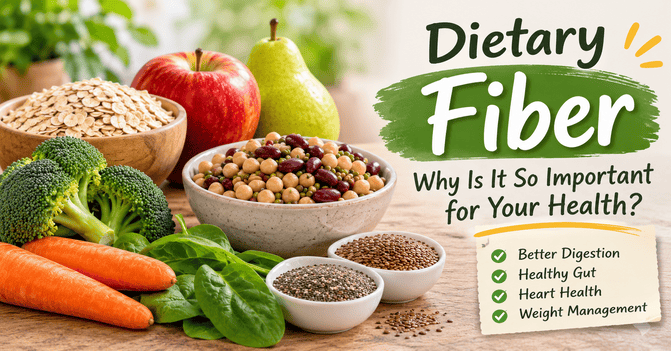
Dietary fiber is one of the most important components of a healthy diet, yet many people do not consume enough of it. While most people focus on protein, carbohydrates, fats, vitamins and minerals, fiber is often overlooked.
Fiber plays a major role in maintaining digestive health, supporting healthy gut bacteria, regulating blood sugar levels, controlling cholesterol and managing body weight. It also helps maintain regular bowel movements and may reduce the risk of several lifestyle-related health conditions.
A fiber-rich diet is not just important for people suffering from constipation or digestive problems. It is essential for everyone who wants to maintain good health and improve overall well-being.
In this article, let’s understand what dietary fiber is, its different types, health benefits, natural food sources and how you can increase your daily fiber intake.
What Is Dietary Fiber?
Dietary fiber is a type of carbohydrate naturally present in plant-based foods that the human digestive system cannot completely break down or digest.
Unlike other carbohydrates, which are broken down into glucose and used for energy, fiber passes through the digestive tract largely intact.
During its journey through the digestive system, fiber performs several important functions. It supports bowel movements, feeds beneficial gut bacteria, slows down glucose absorption and helps regulate cholesterol levels.
Dietary fiber is mainly found in:
-
Fruits
-
Vegetables
-
Whole grains
-
Pulses and legumes
-
Nuts and seeds
Unlike refined foods, which often contain very little fiber, whole plant foods provide a combination of fiber, vitamins, minerals, antioxidants and other beneficial plant compounds.
Types of Dietary Fiber
Dietary fiber is broadly classified into two major types: soluble fiber and insoluble fiber. Both are important for maintaining good health, but they work differently inside the body.
1. Soluble Fiber
Soluble fiber dissolves in water and forms a gel-like substance in the digestive tract.
This gel slows down digestion and the absorption of certain nutrients, including glucose. It also helps reduce the absorption of cholesterol.
Health Benefits of Soluble Fiber
-
Helps regulate blood sugar levels.
-
Supports healthy cholesterol levels.
-
Helps improve metabolic health.
-
Promotes fullness and reduces unnecessary hunger.
-
Supports beneficial gut bacteria.
Best Natural Sources of Soluble Fiber
-
Oats
-
Barley
-
Apples
-
Oranges
-
Guava
-
Citrus fruits
-
Beans
-
Lentils
-
Chickpeas
-
Chia seeds
-
Flaxseeds
Oats contain beta-glucan, a type of soluble fiber known for its cholesterol-lowering benefits.
2. Insoluble Fiber
Insoluble fiber does not dissolve in water. It adds bulk to stool and helps food waste move through the digestive tract.
It plays an important role in maintaining regular bowel movements and preventing constipation.
Health Benefits of Insoluble Fiber
-
Adds bulk to stool.
-
Supports regular bowel movements.
-
Helps prevent constipation.
-
Supports digestive health.
-
Helps maintain normal bowel function.
Best Natural Sources of Insoluble Fiber
-
Whole wheat
-
Wheat bran
-
Brown rice
-
Whole grains
-
Carrots
-
Green leafy vegetables
-
Cucumber
-
Nuts
-
Seeds
-
Vegetable peels
Most plant-based foods contain both soluble and insoluble fiber in varying proportions. Therefore, eating a variety of fruits, vegetables, pulses and whole grains is the best approach.
10 Important Health Benefits of Dietary Fiber
1. Improves Digestion and Prevents Constipation
One of the best-known benefits of dietary fiber is its ability to support healthy digestion.
Insoluble fiber increases stool bulk, while certain soluble fibers help retain water in the stool. Together, they support regular bowel movements.
People who consume insufficient fiber may experience:
Including vegetables, fruits, whole grains and pulses in your daily meals can help improve bowel regularity.
2. Supports Healthy Gut Bacteria
Our intestine contains trillions of microorganisms, collectively known as the gut microbiota.
Some types of dietary fiber act as prebiotics, which means they provide nourishment to beneficial gut bacteria.
When gut bacteria ferment certain fibers, they produce short-chain fatty acids (SCFAs), such as butyrate, acetate and propionate.
These compounds help support:
-
Intestinal health
-
Gut barrier function
-
Healthy bowel function
-
Normal immune activity
A diverse, fiber-rich diet helps support a healthier gut microbiome.
3. Helps Control Blood Sugar Levels
Dietary fiber, particularly soluble fiber, can slow down the digestion and absorption of carbohydrates.
This may reduce sudden increases in blood glucose levels after meals.
Fiber-rich foods also tend to be less processed and provide better nutritional value than refined carbohydrate foods.
People with diabetes, prediabetes or insulin resistance can benefit from including:
-
Oats
-
Barley
-
Lentils
-
Chickpeas
-
Vegetables
-
Whole fruits
-
Whole grains
However, fiber does not replace diabetes medication or medical treatment. Carbohydrate portions and overall meal composition also matter.
4. Helps Reduce Cholesterol Levels
Certain soluble fibers, especially beta-glucan found in oats and barley, help reduce LDL (bad) cholesterol.
Soluble fiber can bind with bile acids in the digestive tract, increasing their removal through stool. The liver then uses cholesterol to produce more bile acids.
This mechanism contributes to lower blood cholesterol levels.
Regularly including oats, barley, beans, lentils, apples and other soluble-fiber-rich foods can support heart health.
Fiber is extremely useful for people trying to manage their body weight.
Fiber-rich foods generally take longer to chew and digest. Some types also absorb water and increase fullness.
This can help:
-
Reduce frequent hunger.
-
Improve satiety after meals.
-
Control unnecessary snacking.
-
Support better portion control.
-
Reduce overall calorie intake when replacing less filling foods.
For example, a bowl of vegetable dal with whole wheat roti may provide greater fullness than a meal consisting mainly of refined flour products.
However, fiber alone does not cause weight loss. Overall calorie balance, physical activity, sleep and dietary habits remain important.
6. May Reduce the Risk of Heart Disease
A fiber-rich diet is associated with a lower risk of cardiovascular disease.
Soluble fiber can help improve cholesterol levels, while fiber-rich foods often contain potassium, magnesium, antioxidants and other heart-supportive nutrients.
Whole grains, fruits, vegetables, legumes and nuts should be regular components of a heart-healthy eating pattern.
7. Supports Healthy Bowel Function
Fiber helps maintain stool consistency and supports the normal movement of waste through the digestive tract.
Adequate dietary fiber is particularly important for people who frequently experience constipation.
However, people suffering from severe bloating, bowel narrowing or certain intestinal conditions may need individualised fiber recommendations.
8. Supports Better Metabolic Health
Fiber-rich diets are associated with better overall metabolic health.
They can help improve blood glucose regulation, support healthy cholesterol levels and promote satiety.
These benefits are particularly useful for people managing obesity, prediabetes, type 2 diabetes and metabolic syndrome.
Research suggests that higher dietary fiber intake, particularly from whole grains, is associated with a lower risk of colorectal cancer.
Fiber may contribute through improved bowel function, changes in gut microbiota and the production of beneficial short-chain fatty acids.
However, fiber is not a guaranteed prevention method and does not replace recommended cancer screening.
10. Helps Maintain Long-Term Digestive Health
A diet containing a variety of fiber sources supports healthy bowel movements and beneficial gut bacteria.
It also encourages a balanced eating pattern rich in plant foods, antioxidants and micronutrients.
Therefore, consuming enough fiber every day is an important part of maintaining long-term health.
Best Natural Food Sources of Dietary Fiber
The easiest way to increase fiber intake is to include different plant-based foods in your daily meals.
1. Fruits
Fruits provide fiber along with vitamins, minerals and antioxidants.
Good choices include: